DCR vs Non-DCR Solar Panels: Which One Keeps Your Subsidy?
By UVR Green Energies Team · Published · 6 min read · Technology
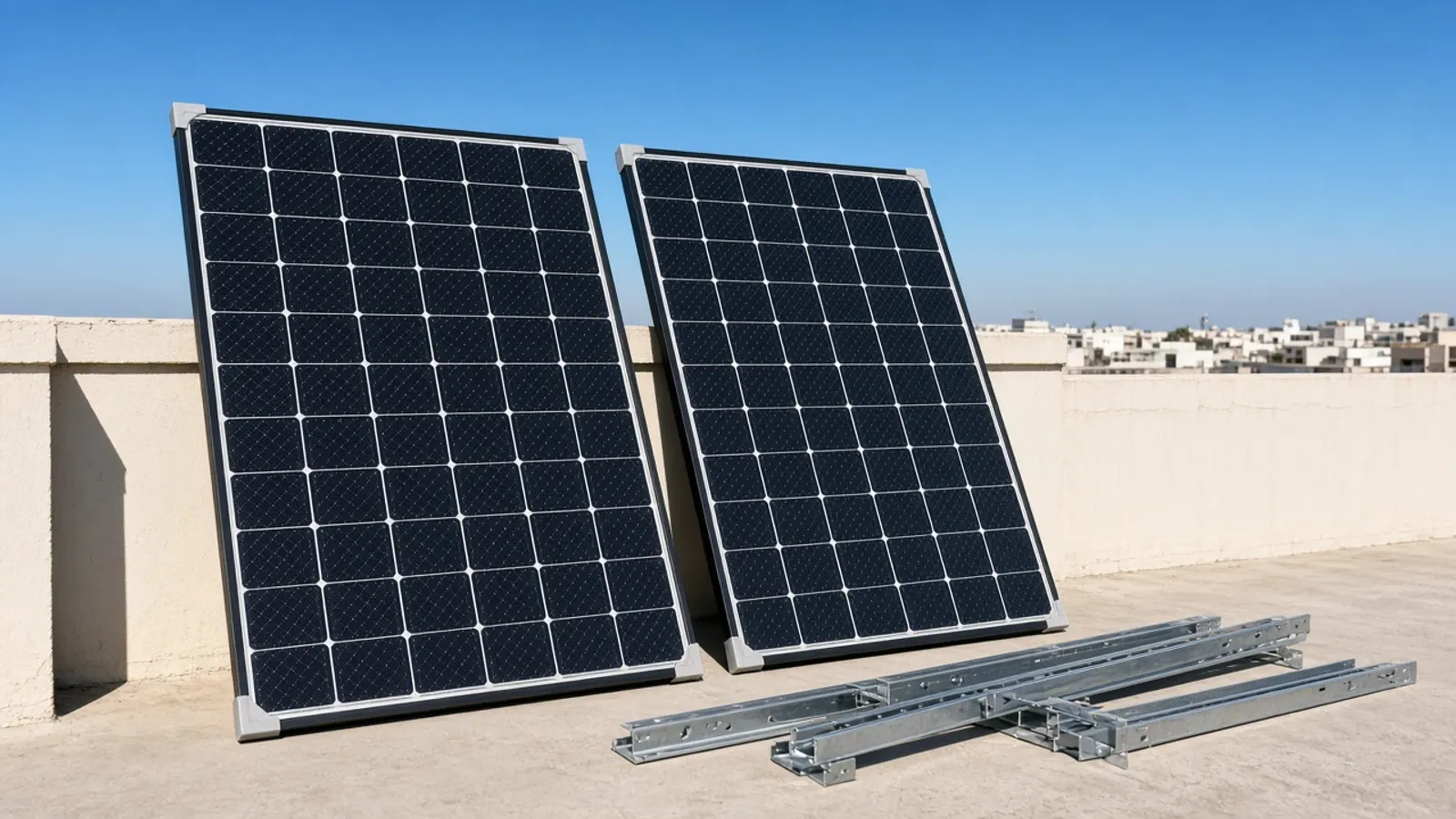
One label on your solar panel decides whether ₹78,000 of subsidy reaches you. Here is what DCR means, how ALMM fits in, and how to check before you pay.
The short answer
If you want the PM Surya Ghar subsidy, you must use DCR panels: modules made in India from Indian-made cells. Non-DCR modules anywhere in the system make the whole installation ineligible. Separately, net-metering projects commissioned from 1 June 2026 generally need ALMM List-I modules with List-II cells. Non-DCR panels only make sense if you are not claiming the central subsidy.
Key takeaways
- DCR means the module and its cells are both manufactured in India.
- Any non-DCR module in the system makes it ineligible for the PM Surya Ghar subsidy.
- ALMM List-I covers modules and List-II covers cells; both matter for net-metering projects from 1 June 2026.
- For a 3 kW Gujarat home, a non-DCR system would need to cost under about ₹84,000 in total just to match the DCR net cost.
- Verify with the DCR declaration, OEM certificate and module serial numbers before installation.
The label that is worth ₹78,000
Two solar panels can look identical on your terrace. Same size, same dark glass, same aluminium frame. Yet one can keep your PM Surya Ghar subsidy and the other can quietly cancel it.
The difference is three letters: DCR. Here is the answer up front. If you want the central subsidy, every module in your system must be DCR, meaning made in India from Indian-made cells. Non-DCR panels only make sense if you are not claiming it.
This guide explains what the terms mean, how the ALMM lists fit in, and exactly how to check before you pay.
What DCR and non-DCR actually mean
A solar panel (module) is built from many solar cells. The cell is where sunlight becomes electricity. The module is the framed, glass-covered panel that holds them.
- DCR module: the module is manufactured in India and the cells inside it are manufactured in India.
- Non-DCR module: anything else. That includes a module assembled in India using imported cells.
The subsidy rule, in plain words
The PM Surya Ghar guidelines make the Domestic Content Requirement an essential condition for central financial assistance. They go further: using non-DCR modules in any form in the installation makes it ineligible.
So mixing is not a loophole. Six DCR panels plus one non-DCR panel can mean no subsidy for the whole system.
The guidelines also offer a "Give It Up" option. Consumers who choose not to claim the subsidy, through that option or otherwise, are free to install without DCR modules.
Where ALMM fits in
ALMM is MNRE's Approved List of Models and Manufacturers. It is a separate rule from DCR, and it has two parts:
| List | What it covers |
|---|---|
| ALMM List-I | Approved solar PV module models and manufacturers |
| ALMM List-II | Approved solar PV cell models and manufacturers |
MNRE's office memorandum says net-metering and open access projects commissioned on or after 1 June 2026 must source modules from List-I and cells from List-II. In July 2026, MNRE said there is no blanket extension, with only a limited window up to 31 December 2026 for commissioning some net-metering and open access projects.
A short timeline of the rules
These rules did not arrive all at once. Here is how they built up, using dates from MNRE documents:
| Date | What happened |
|---|---|
| 13 February 2024 | PM Surya Ghar subsidy rates take effect, with DCR as an essential condition |
| 9 December 2024 | MNRE issues the framework for ALMM List-II (cells), with 1 June 2026 as the effective date |
| 31 July 2025 | ALMM List-II for solar cells is first published |
| 1 June 2026 | Net-metering projects commissioned from this date must use List-I modules with List-II cells |
| 18 July 2026 | MNRE says no blanket extension, only a limited window to 31 December 2026 for some projects |
| 21 August 2026 | Ninth revision of ALMM List-II issued |
DCR vs non-DCR: side by side
| Factor | DCR panels | Non-DCR panels |
|---|---|---|
| Where cells are made | India | Outside India, or not verified as Indian |
| Where modules are made | India | India or abroad |
| PM Surya Ghar subsidy | Eligible, if all other conditions are met | Not eligible; one non-DCR module disqualifies the system |
| Typical use | Subsidised home systems | Systems not claiming the central subsidy |
| Key paperwork | DCR declaration and OEM DCR declaration | Standard datasheets and test reports |
| ALMM for net metering from June 2026 | Must match List-I and List-II | Must match List-I and List-II, unless exempt |
The money question: does non-DCR ever win for a home?
Let us test it with UVR's Gujarat rate list, which is priced for DCR-eligible subsidy systems.
For systems up to 3 kW, where the subsidy is largest relative to cost, that is a high bar. Above 3 kW the subsidy stays fixed at ₹78,000, so the gap narrows for very large homes. Ask for both quotes and compare the net figure, not the sticker price.
How to verify your panels before you pay
Do these checks before installation, not after. Once panels are on the roof, changing them is expensive.
- Ask for the DCR self-declaration in MNRE's format, plus the module manufacturer's DCR declaration. NPCL in Greater Noida, for example, lists both among required documents for subsidy-based residential projects.
- Get the exact module model number in your quotation, not just the brand name.
- Check the model against MNRE's current ALMM lists. MNRE revises List-II regularly; the ninth revision was issued in August 2026.
- Collect serial numbers for every module. They are uploaded on the national portal.
- Keep copies of datasheets, BIS or IEC test reports and warranty cards.
Three situations, three answers
Is DCR a quality badge?
No. DCR tells you where the cells and modules are made, not how well a particular product performs. Quality depends on the manufacturer and model.
Judge any panel on its datasheet, test reports and warranty terms. For a subsidy-based home system, though, the decision is already made for you. It has to be DCR.
What to get written into your quotation
A quotation is the document you can point to later, so make it specific. For a subsidy-based home system, ask for these lines in writing:
- "Modules: DCR, model number ____, wattage ____, quantity ____"
- "DCR self-declaration and OEM DCR declaration to be provided before installation"
- "Module and cell models compliant with the current ALMM List-I and List-II, as applicable"
- "Serial numbers of all modules and the inverter to be handed over for portal upload"
If a vendor will not commit to these lines, you have learned something important before spending a rupee.
What this means for your project
- Claiming the subsidy? Use DCR modules only, from a portal-registered vendor.
- Not claiming it? Non-DCR is allowed under the scheme, but ALMM rules for net metering still apply.
- Unsure which applies? Start with the subsidy amount. Our PM Surya Ghar subsidy guide and the subsidy checker show what you would give up.
Next step
At UVR Green Energies, the module brand and model on your roof are named in your quotation, along with the documents you need for the portal. Book a free site survey and ask us to walk you through the DCR paperwork.
Call +91 95375 66799 or use the contact page. For home systems, see residential rooftop solar.
Frequently asked questions
What is a DCR solar panel?
DCR stands for Domestic Content Requirement. Under the PM Surya Ghar guidelines, a DCR module is a solar module manufactured in India using solar cells that are also manufactured in India. It is an essential condition for the central subsidy. A module assembled in India from imported cells does not meet the DCR condition.
Can I get the PM Surya Ghar subsidy with non-DCR panels?
No. The guidelines say that using non-DCR modules in any form in the installation makes it ineligible for central financial assistance. Even one non-DCR panel in a mixed system can cost you the entire subsidy. Consumers who choose not to claim the subsidy, including through the Give It Up option, are free to use non-DCR modules.
What is the difference between ALMM List-I and List-II?
ALMM is MNRE's Approved List of Models and Manufacturers. List-I covers solar PV modules and List-II covers solar PV cells. MNRE has said that net-metering and open access projects commissioned on or after 1 June 2026 must use List-I modules made with List-II cells, with only a limited window to 31 December 2026 for some projects.
How can I check if my panels are DCR?
Ask your installer for the DCR self-declaration in MNRE's format and the module manufacturer's DCR declaration, along with module serial numbers. Distribution companies such as NPCL list these among required documents for subsidy-based residential projects. Check the module model against MNRE's current ALMM lists and keep copies of everything for the portal upload.
Are DCR panels better or worse quality than non-DCR panels?
DCR describes where the cells and modules are made, not how good a particular product is. Quality depends on the manufacturer and model. Compare datasheets, BIS or IEC test reports and warranty terms for the exact model quoted. For a subsidy-based home system, the choice is already made for you: it must be DCR.
Sources
- MNRE: PM Surya Ghar guidelines for CFA to residential consumers (DCR clause)
- MNRE notice: ALMM List-II for solar PV cells, limited window till 31.12.2026
- MNRE O.M.: ALMM List-II applicability and effective date
- MNRE O.M. (July 2026): ALMM List-II framework dated 09.12.2024 and applicability
- MNRE: Ninth revision of ALMM List-II for solar PV cells (August 2026)
- NPCL: Net metering document requirement list (DCR declarations)
- PIB: PM Surya Ghar Muft Bijli Yojana CFA pattern