How to Choose a Solar Installer in Vadodara: 15-Point Checklist
By UVR Green Energies Team · Published · 6 min read · Installation & Maintenance
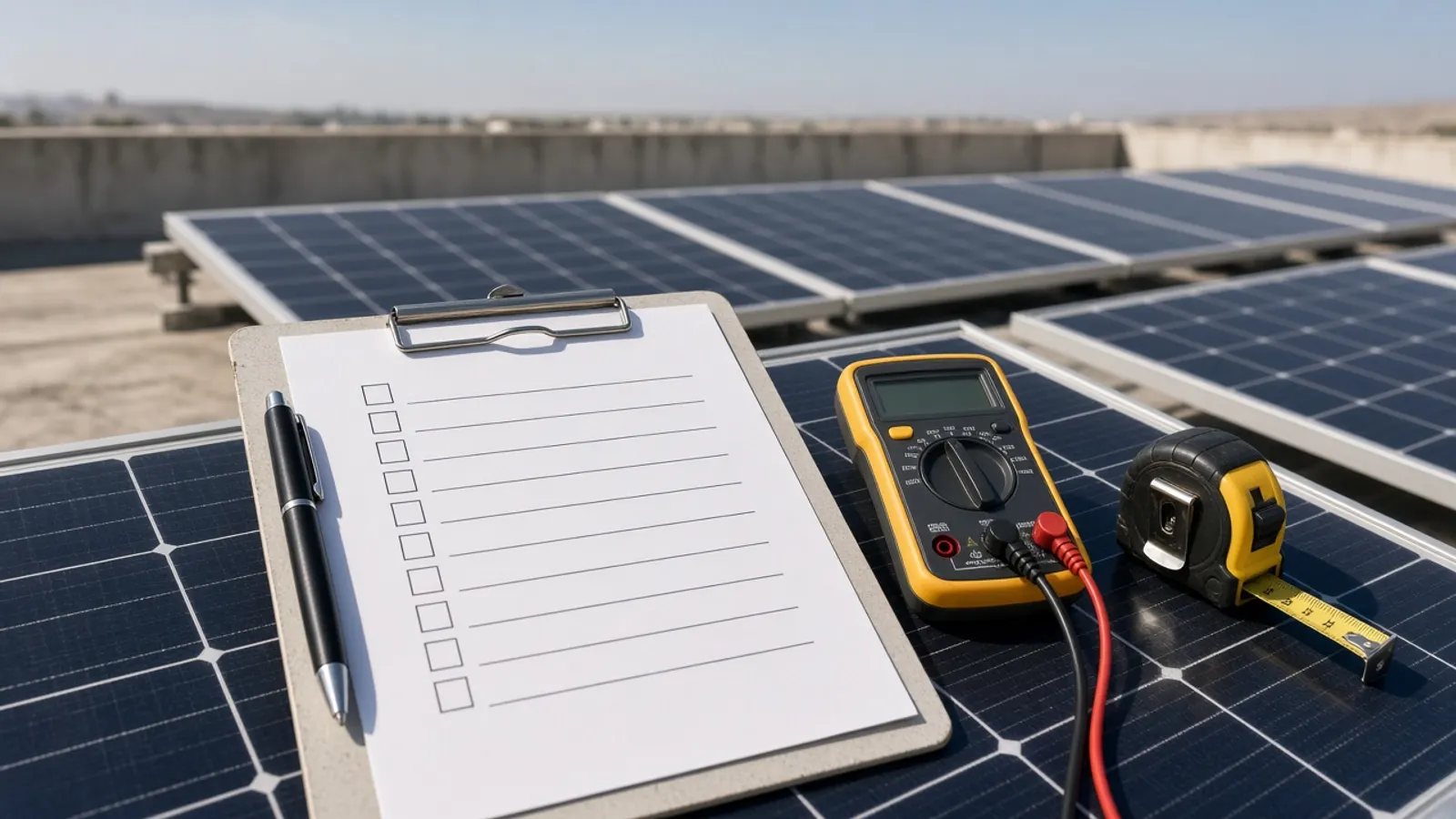
Three quotes, three different stories. Use this checklist, built from PM Surya Ghar vendor rules, to compare solar installers in Vadodara fairly.
The short answer
To choose a solar installer in Vadodara, first confirm they are registered on the PM Surya Ghar national portal, because only registered vendors can deliver the subsidy. Then insist on DCR modules, ALMM-compliant panels and cells, a real shadow survey, structure drawings, full documentation, and five years of comprehensive maintenance in writing. Compare quotes on equipment and service, not price alone.
Key takeaways
- Only vendors registered on the national portal can deliver the PM Surya Ghar subsidy.
- Ask for the DCR declaration, model numbers and serial numbers in writing before installation.
- From 1 June 2026, net-metering projects generally need ALMM List-I modules and List-II cells.
- Registered vendors must provide five years of comprehensive maintenance from commissioning.
- A quote that treats the subsidy as an invoice discount is a red flag.
Three quotes, three different stories
Here is a scene many Vadodara families will recognise (hypothetical, but common). You ask three installers for a 3 kW quote. One is the cheapest, one is the most confident, and one sends a twelve-page PDF you have not had time to read.
How do you compare them fairly? Not by price alone. The right installer is registered on the PM Surya Ghar portal, uses compliant Indian-made panels, designs from a real survey and puts maintenance in writing.
This checklist turns those rules into 15 questions you can ask anyone, including us.
Part A: Eligibility and paperwork
1. Are you registered on the PM Surya Ghar national portal? The scheme is implemented only through registered vendors. If you want the subsidy, this is non-negotiable.
2. What is your vendor rating, and can I see it? The guidelines say every registered vendor gets a rating based on installations, equipment quality, workmanship and service, visible to consumers on the portal.
3. Who handles the portal upload and DISCOM paperwork? You have your own portal login, but a good vendor guides you through uploads, geo-tagged photos and the DISCOM inspection.
4. How exactly does the subsidy reach me? The correct answer: after DISCOM inspection and approval, through an e-token, into your bank or loan account.
Part B: Equipment
5. Are the modules DCR, and will you give me the declaration? The Domestic Content Requirement is essential for the subsidy. Modules must be made in India from Indian-made cells.
6. Are the modules and cells on the current ALMM lists? MNRE says net-metering projects commissioned on or after 1 June 2026 must use ALMM List-I modules made with List-II cells. Only a limited window to 31 December 2026 applies for some projects, so ask how yours complies.
7. Which exact module and inverter models are you quoting? A brand name is not enough. Ask for model numbers and datasheets in the quotation.
8. What protection is included? The scheme lists earthing, lightning and surge protection, DC and AC distribution boxes and proper cabling as standard system components.
9. Will I get test reports, serial numbers and warranty cards? The model agreement says the vendor provides BIS or IEC reports, serial numbers and warranty cards for panels and inverter.
Part C: Design
10. Will an engineer survey my roof before quoting a final size? Shadows from water tanks, stair cabins and neighbouring buildings change output. A size quoted over the phone is a guess.
11. Can I see the structure design and drawing? The model agreement puts feasibility study, roof strength, shadow analysis and structure design in the vendor's scope.
12. Will you give me a layout and single-line diagram? These drawings matter for the DISCOM, for portal upload and for any future repair.
Part D: After-sales
13. What is covered in the five years after commissioning? Under PM Surya Ghar, registered vendors must provide free repairs and maintenance for a five-year comprehensive maintenance period, replacing non-performing components free of cost.
14. Will you show us how to clean and monitor the system? The model agreement asks vendors to educate consumers on module cleaning and maintenance best practice.
15. What are the payment milestones? The guidelines let consumers opt for milestone-based payment, as mutually agreed with the vendor. Get the schedule in writing.
The quick-scan table
Use this when three quotes are open side by side.
| Question | A good answer sounds like | Red flag |
|---|---|---|
| Portal registration | "Yes, here is how we appear on the portal" | "Registration is not needed" |
| Subsidy flow | "Paid to you after DISCOM approval" | "We deduct it on the invoice" |
| Panels | "DCR, ALMM-listed, here are the model numbers" | "Top brand, don't worry about the model" |
| Survey | "Our engineer will visit before final sizing" | "3 kW is standard for every house" |
| Documents | "You get datasheets, reports, serials, drawings" | "We will handle everything, no need for papers" |
| Maintenance | "Five years comprehensive, in writing" | "Call us if something happens" |
Five warning signs you can spot in the first call
You do not need to be an engineer to catch a weak offer early. Listen for these in the very first conversation:
- A size before a survey. "Every house needs 5 kW" means nobody has looked at your bills or your roof.
- Pressure to pay today. A limited-time "subsidy closing soon" pitch is a sales tactic. The scheme is run through a national portal, not a festival offer.
- Vague equipment. "Top brand panels" or "best inverter" without model numbers tells you nothing you can verify.
- No mention of the DISCOM. Net metering needs DISCOM inspection and a bidirectional meter. An installer who skips that step in the explanation may skip it in practice.
- Promises about DISCOM timelines. No vendor controls how fast a DISCOM inspects. Honest installers say so.
What to check after installation
The checklist does not end when the panels go up. Before the installer's team leaves your terrace, take ten minutes:
- See the inverter switch on and show live generation on a sunny day.
- Photograph the module serial numbers if they are not already in your documents.
- Confirm who will attend the DISCOM inspection, and when you will be told the date.
- Save the installer's service number and the name of the person responsible for your system.
How UVR answers these questions
We wrote this checklist so that you can hold every installer to it, including us. UVR Green Energies is based in Bhayli, Vadodara. Our residential scope covers survey, layout, structure, modules, inverter, cabling, net-meter application support and commissioning, plus PM Surya Ghar paperwork for eligible homes.
UVR states a 5-year workmanship warranty on our installation work. The module and inverter brands on your roof are the ones named in your quotation, with their manufacturers' warranties.
Before you sign
- Vendor's portal registration confirmed
- DCR declaration promised in writing
- Module and inverter model numbers in the quote
- Site survey done and shadow-free area noted
- Structure drawing and single-line diagram promised
- Five-year maintenance terms written down
- Payment milestones agreed
Compare quotes side by side with the solar quote comparison tool. If you are still deciding on size, read our Vadodara price guide, and for panel rules, see DCR vs non-DCR panels.
Next step
Put us through the checklist. Book a free site survey and we will answer all 15 questions in writing for your roof.
Call +91 95375 66799 or use the contact page. You can also browse our residential rooftop solar page.
Frequently asked questions
How do I know if a solar installer is approved for PM Surya Ghar?
The scheme is implemented only through vendors registered on the PM Surya Ghar national portal, and a consumer must choose a registered vendor to receive the subsidy. Vendor profiles on the portal show offered specifications, prices, contacts and a vendor rating based on installations, equipment quality, workmanship and service. Ask the installer how they appear on the portal.
What documents should a solar installer give me?
Under the PM Surya Ghar model agreement, the vendor should provide technical catalogues, warranty certificates for panels and inverter, BIS or IEC test reports, module and inverter serial numbers, the layout and single-line diagram, structure design and drawings, and cable details. These are needed for portal upload and for any warranty claim later.
What is the warranty and maintenance under PM Surya Ghar?
The scheme guidelines require registered vendors to provide free repairs and maintenance for five years of comprehensive maintenance from commissioning, replacing non-performing components free of cost in that period. The model agreement also says the complete system should be warranted for five years from DISCOM commissioning. Manufacturer warranties on modules and inverters are separate.
What is ALMM and why does it matter for my rooftop?
ALMM is MNRE's Approved List of Models and Manufacturers. List-I covers solar modules and List-II covers solar cells. MNRE has said net-metering projects commissioned on or after 1 June 2026 must use List-I modules made with List-II cells, with only a limited window to 31 December 2026 for some projects. Ask your installer how your project complies.
Should I choose the cheapest solar quote?
Not on price alone. Compare the net price after subsidy together with module and inverter model numbers, structure specification, estimated monthly generation, documentation and after-sales terms. A low quote that omits DCR proof, structure drawings or the five-year maintenance commitment can cost you the subsidy or years of lower output.