PM Surya Ghar Crosses 19.7 GW, 57 Lakh Units: March 2027 Window
By UVR Green Energies Team · Published · 8 min read · PM Surya Ghar Subsidy
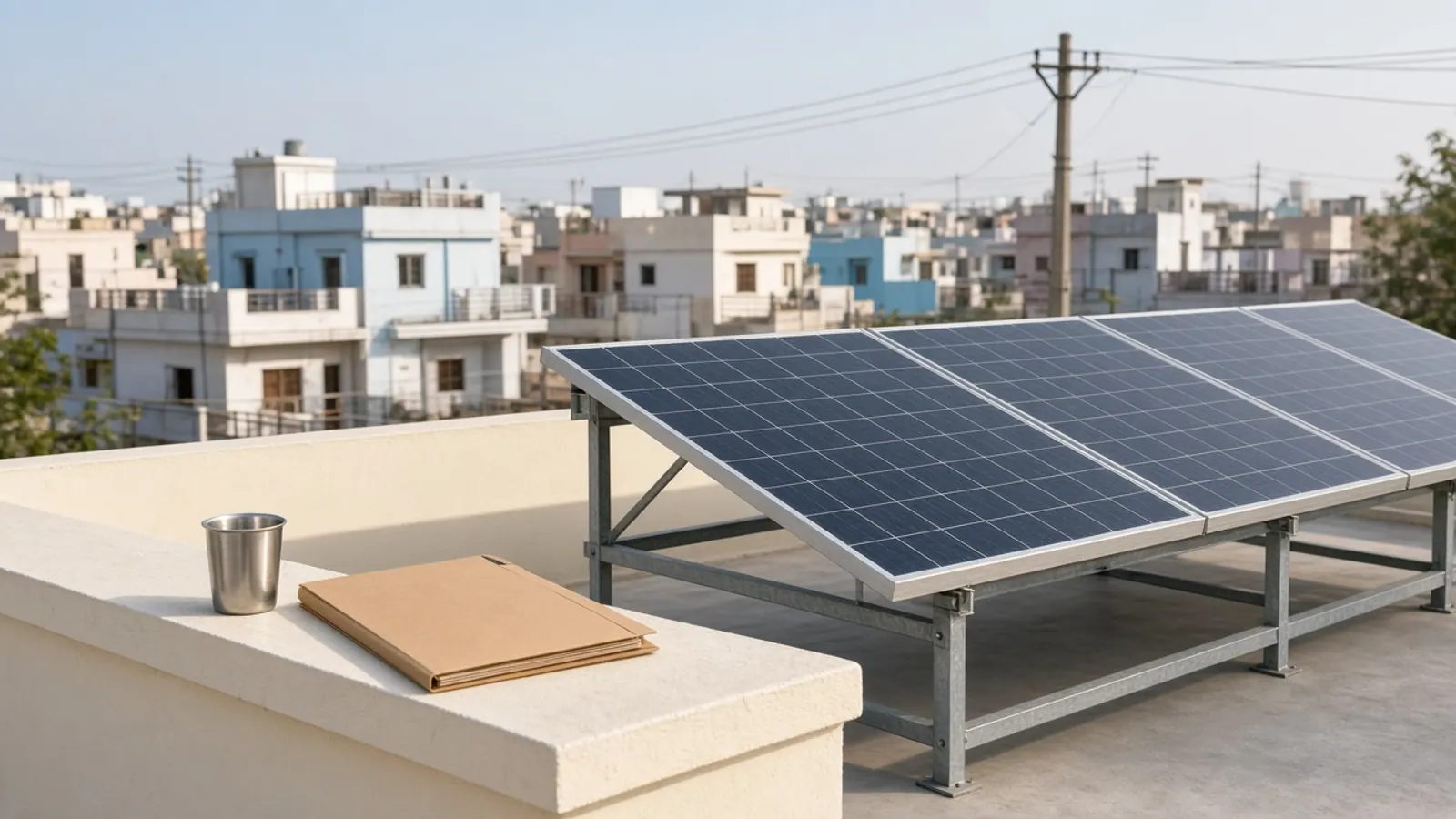
India's residential rooftop solar rollout crossed a major threshold this week. According to MNRE portal data as of 16 November 2026 (reported by The Hindu BusinessLine and Republic World on 18–19 November 2026), PM Surya Ghar: Muft Bijli…
The short answer
PM Surya Ghar is adding one lakh systems every six days, toward one crore households by 31 March 2027. Portal data as of 16 November 2026 is reported as 19,744.31 MW (19.74 GW) across 56.97 lakh setups. Gujarat (3,523.98 MW), Maharashtra (3,336.54 MW), and Uttar Pradesh (3,231.59 MW) account for over 51.11% of operational capacity. No official extension beyond 31 March 2027 has been notified as of 21 November 2026.
Key takeaways
- 19.74 GW & 56.97 lakh setups live (16 Nov 2026 data): BusinessLine and Republic World report 19,744.31 MW across 56.97 lakh operational installations serving 67.17 lakh households, backed by ~₹37,533 crore in central CFA.
- State capacity vs single-home adoption (as of 16 Nov 2026): Per MNRE portal figures as of 16 November 2026 (reported 18–19 November), Gujarat stood at 3,523.98 MW (3.75 kW average setup), Maharashtra at 3,336.54 MW, and Uttar Pradesh at 3,231.59 MW across 9.66 lakh setups (near 1:1 ratio with 9.75 lakh households, 3.35 kW average).
- India crosses ~175 GW total solar & 300+ GW RE: PIB factsheets (13 & 17 Nov 2026) show ~175 GW installed solar by 31 October 2026 (including 34.97 GW grid-connected rooftop solar across all segments), while India surpassed 300 GW renewable capacity in Q4 2026.
- 31 March 2027 remains the official Phase-1 end date: MNRE Guidelines Para 2(d) and the 2025-26 Annual Report maintain 31 March 2027 (FY 2026-27); press talk of possible extensions is not an official notification.
- Don't confuse processing targets with guarantees: MNRE Para 6(t) sets a 15-day CFA processing target after DISCOM approval, and PIB explainers note 30 days after bank details/cancelled cheque — neither is a consumer guarantee if documents or DCR serials fail checks.
The mid-November 2026 milestone and the March 2027 window
India's residential rooftop solar rollout crossed a major threshold this week. According to MNRE portal data as of 16 November 2026 (reported by The Hindu BusinessLine and Republic World on 18–19 November 2026), PM Surya Ghar: Muft Bijli Yojana had commissioned 19,744.31 MW of rooftop capacity across 56.97 lakh operational installations, serving 67.17 lakh households nationwide with roughly ₹37,533 crore in Central Financial Assistance (CFA) disbursed (up from PIB's 13 November release reporting 19.1 GW and 65.26 lakh households as of 2 November 2026). With Phase 1 of the scheme scheduled to run till 31 March 2027, the latest state-by-state numbers show where adoption is moving fastest — and why homeowners in Gujarat, Indore, and Greater Noida should not leave paperwork to the final quarter.
The short answer
As of mid-November 2026, PM Surya Ghar installations are running at one lakh new systems every six days (up from 118 days for the first one lakh), with MNRE aiming for an average of 5 days shortly as India pushes toward one crore households by 31 March 2027 (MNRE Operational Guidelines, Para 2(d)). Gujarat (3,523.98 MW), Maharashtra (3,336.54 MW), and Uttar Pradesh (3,231.59 MW) account for over 51.11% of operational scheme capacity, while the IEA's India Renewable Energy Market Report 2026 projects India's distributed solar PV for self-consumption will triple to over 100 GW by 2030. No official extension beyond 31 March 2027 has been notified as of 21 November 2026.
Key takeaways
- 19.74 GW & 56.97 lakh setups live (16 Nov 2026 data): BusinessLine and Republic World report 19,744.31 MW across 56.97 lakh operational installations serving 67.17 lakh households, backed by ~₹37,533 crore in central CFA.
- State capacity vs single-home adoption (as of 16 Nov 2026): Per MNRE portal figures as of 16 November 2026 (reported 18–19 November), Gujarat stood at 3,523.98 MW (3.75 kW average setup), Maharashtra at 3,336.54 MW, and Uttar Pradesh at 3,231.59 MW across 9.66 lakh setups (near 1:1 ratio with 9.75 lakh households, 3.35 kW average).
- India crosses ~175 GW total solar & 300+ GW RE: PIB factsheets (13 & 17 Nov 2026) show ~175 GW installed solar by 31 October 2026 (including 34.97 GW grid-connected rooftop solar across all segments), while India surpassed 300 GW renewable capacity in Q4 2026.
- 31 March 2027 remains the official Phase-1 end date: MNRE Guidelines Para 2(d) and the 2025-26 Annual Report maintain 31 March 2027 (FY 2026-27); press talk of possible extensions is not an official notification.
- Don't confuse processing targets with guarantees: MNRE Para 6(t) sets a 15-day CFA processing target after DISCOM approval, and PIB explainers note 30 days after bank details/cancelled cheque — neither is a consumer guarantee if documents or DCR serials fail checks.
What this week's MNRE and PIB numbers actually show
Across the Bharat Renewable Energy Summit & Expo (BRESE) 2026 (2–5 November), the 31st CII Partnership Summit (13 November), and MNRE's state-wise update (18–19 November), three clear patterns stand out for rooftop buyers:
| State | Operational capacity (MW) | Installations & households served | Avg. system size | Central CFA disbursed |
|---|---|---|---|---|
| Gujarat | 3,523.98 MW | 9.38 lakh setups → 13.21 lakh households | 3.75 kW | ₹6,819.9 crore |
| Maharashtra | 3,336.54 MW | 9.15–9.16 lakh setups → 13.97 lakh households | 3.64 kW | ₹6,437.53 crore |
| Uttar Pradesh | 3,231.59 MW | 9.66 lakh setups → 9.75 lakh households | 3.35 kW | ₹6,510.47 crore |
| Kerala | 1,602.73 MW | 4.14 lakh setups → 4.21 lakh households | 3.87 kW | — |
| Rajasthan | 1,456.86 MW | 3.72 lakh setups → 3.87 lakh households | — | — |
| Pan-India (PMSG, as of 16 Nov 2026) | 19,744.31 MW | 56.97 lakh setups → 67.17 lakh households | — | ~₹37,533 crore |
Sources: The Hindu BusinessLine (18–19 Nov 2026) and Republic World (19 Nov 2026, citing 16 Nov portal data).
Notice why the household count (67.17 lakh) is higher than the installation count (56.97 lakh): in Gujarat (1.40 families per setup) and Maharashtra (1.53 families per setup), apartment societies and multi-family buildings are installing larger shared common-facility systems. In Uttar Pradesh (9.66 lakh setups for 9.75 lakh households), almost every connection is an independent single-family home.
Why India's macro solar surge matters on your roof
Beyond residential rooftops, two macro reports from mid-November 2026 underline why distributed solar is moving into the mainstream:
- Domestic module capacity & cost curve: PIB PRID 2337251 (17 Nov 2026) places India's total installed solar at ~175 GW as of 31 October 2026 (including 34.97 GW of grid-connected rooftop solar across all segments) and notes solar module manufacturing capacity rose to 192 GW by June 2026 — while the IEA's India Renewable Energy Market Report 2026 estimates module manufacturing capacity reached around 225 GW in September 2026, making India the world's second-largest module manufacturer.
- Self-consumption is tripling: The IEA forecasts India's distributed solar PV for self-consumption will triple to more than 100 GW by 2030, driven by PM Surya Ghar on homes and corporate open-access/C&I rooftop adoption. Meanwhile, PIB PRID 2335742 reports nearly 21 lakh households have already recorded zero-energy electricity bills (though monthly fixed charges and levies still apply under state net-metering rules).
For a homeowner, strong domestic DCR module manufacturing is practical news: PM Surya Ghar central CFA requires domestically manufactured cells and modules (DCR), and non-DCR modules make a residential plant ineligible for subsidy.
What this means before 31 March 2027 in Gujarat, Indore & Greater Noida
With ~33–34 lakh installations remaining to reach the initial 1 crore target over roughly four months, DISCOM inspection queues and vendor schedules will get tighter between December and March. If you are planning rooftop solar in one of UVR's active regions, keep three local rules in mind:
- Official window ends 31 March 2027: MNRE's Operational Guidelines (Para 2(d)) and the MNRE Annual Report 2025-26 both state the scheme implementation period is till 31 March 2027. Do not rely on unnotified rumours of a multi-month extension when timing a purchase.
- State rules vary sharply:
- Gujarat (Vadodara, Surat, Bharuch; Ahmedabad subject to approval): Central CFA (up to ₹78,000, subject to eligibility and DCR modules) stacks with the 22 October 2026 Gujarat state DBT only for eligible systems commissioned on or after 22 October 2026 up to 2.18 kWp DC (with a three-year expansion lock), and net metering follows the GERC DRES Regulations, 2026 (Notification No. 11 of 2026, 30 October 2026).
- Greater Noida (NPCL): Central CFA (up to ₹78,000, subject to eligibility and DCR modules) sits alongside UPNEDA's state top-up (₹15,000/kW up to ₹30,000 for private residential homes, subject to UPNEDA release and eligibility) — read our Greater Noida NPCL Guide.
- Indore (MPPKVVCL): Central CFA (up to ₹78,000, subject to eligibility and DCR modules) applies with no separate MP state top-up verified, MPERC waives the ₹1,000 processing and meter-testing fees (meter cost still payable), and plant size cannot exceed sanctioned load — read our Indore Net Metering Guide.
- Know the CFA & loan payout order: You pay the registered installer upfront; CFA follows DISCOM inspection and portal claim. While MNRE Para 6(t) targets CFA processing within 15 days of DISCOM approval and PIB explainers mention 30 days from submitting bank details/cancelled cheque, neither timeline is a guarantee. If you take a scheme loan, CFA credits to your loan account first.
Next step
Whether you are checking feasibility in Vadodara, Ahmedabad, Surat, Bharuch, Indore, or Greater Noida, send a clear photo of your latest electricity bill before the Q4 rush begins. Call or WhatsApp UVR Green Energies HQ at +91 90819 66799 (or email info@uvrgreenenergies.com via contact), or contact your regional desk directly: Gujarat +91 96248 66799, Indore +91 97147 06799, or Greater Noida +91 97374 66799.
Frequently asked questions
How many households have joined PM Surya Ghar as of November 2026?
Official portal data as of 16 November 2026 (reported on 18–19 November 2026) shows 56.97 lakh operational installations delivering 19,744.31 MW across 67.17 lakh households, with around ₹37,533 crore disbursed in central CFA.
Is PM Surya Ghar closing on 31 March 2027?
Under MNRE's Operational Guidelines (Para 2(d)) and MNRE's Annual Report 2025-26, the scheme's implementation period runs through FY 2026-27, ending 31 March 2027. As of 21 November 2026, no official MNRE notification extending the scheme beyond that date has been published.
Which states recorded the highest PM Surya Ghar capacity as of mid-November 2026?
Per MNRE portal data as of 16 November 2026 (reported 18–19 November 2026), Gujarat recorded 3,523.98 MW (₹6,819.9 crore CFA), Maharashtra 3,336.54 MW (₹6,437.53 crore), and Uttar Pradesh 3,231.59 MW (₹6,510.47 crore). Together, those three states account for over 51.11% of operational scheme capacity.
Does "zero electricity bill" mean fixed charges disappear too?
No. While PIB notes nearly 21 lakh households achieved zero-energy electricity bills by offsetting grid consumption, state electricity regulators (GERC in Gujarat, MPERC in MP, and UPERC in UP) still levy monthly fixed/demand charges and applicable government duties separately.
How fast is PM Surya Ghar subsidy credited after installation?
MNRE guidelines (Para 6(t)) state a processing target of 15 days after DISCOM approval on the portal, while PIB explainers describe receiving subsidy within 30 days after submitting bank details and a cancelled cheque. Both start after inspection/submission steps clear and are processing targets, not guaranteed payout dates.
Sources
- The Hindu BusinessLine — PM Surya Ghar Drives Solar Surge with Gujarat, Maharashtra, UP Leading Capacity Addition: MNRE (18–19 November 2026)
- Republic World — PM Surya Ghar Scheme Drives Rooftop Solar Expansion, India Crosses 19,744 MW (19 November 2026)
- PIB — India's Solar Growth Enters a New Era (PRID 2337251, 17 November 2026)
- PIB — India's Renewable Energy Journey: Powering a Cleaner Future (PRID 2335742, 13 November 2026)
- PIB — Union Minister Pralhad Joshi at 31st CII Partnership Summit (PRID 2335824, 13 November 2026)
- IEA — India Renewable Energy Market Report 2026: Executive Summary
- MNRE — Operational Guidelines for CFA to Residential Consumers under PM Surya Ghar (Oct 2026 copy)
- MNRE — Annual Report 2025-26
- PIB — PM Surya Ghar: Muft Bijli Yojana Turns One (12 February 2025)